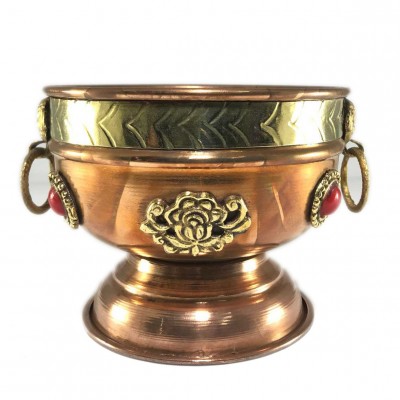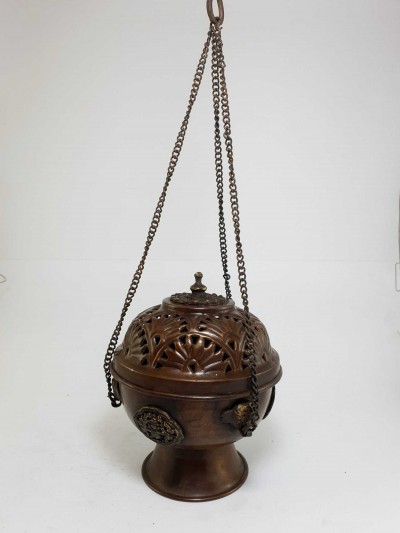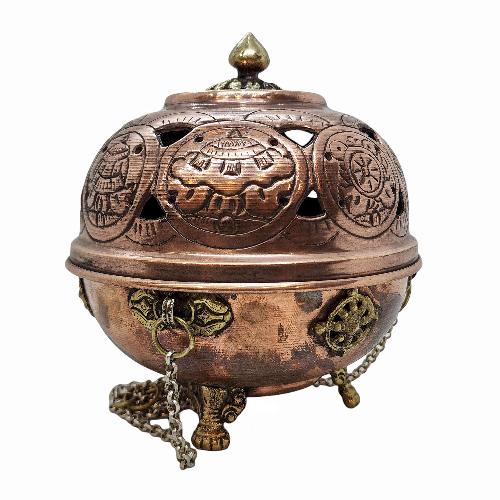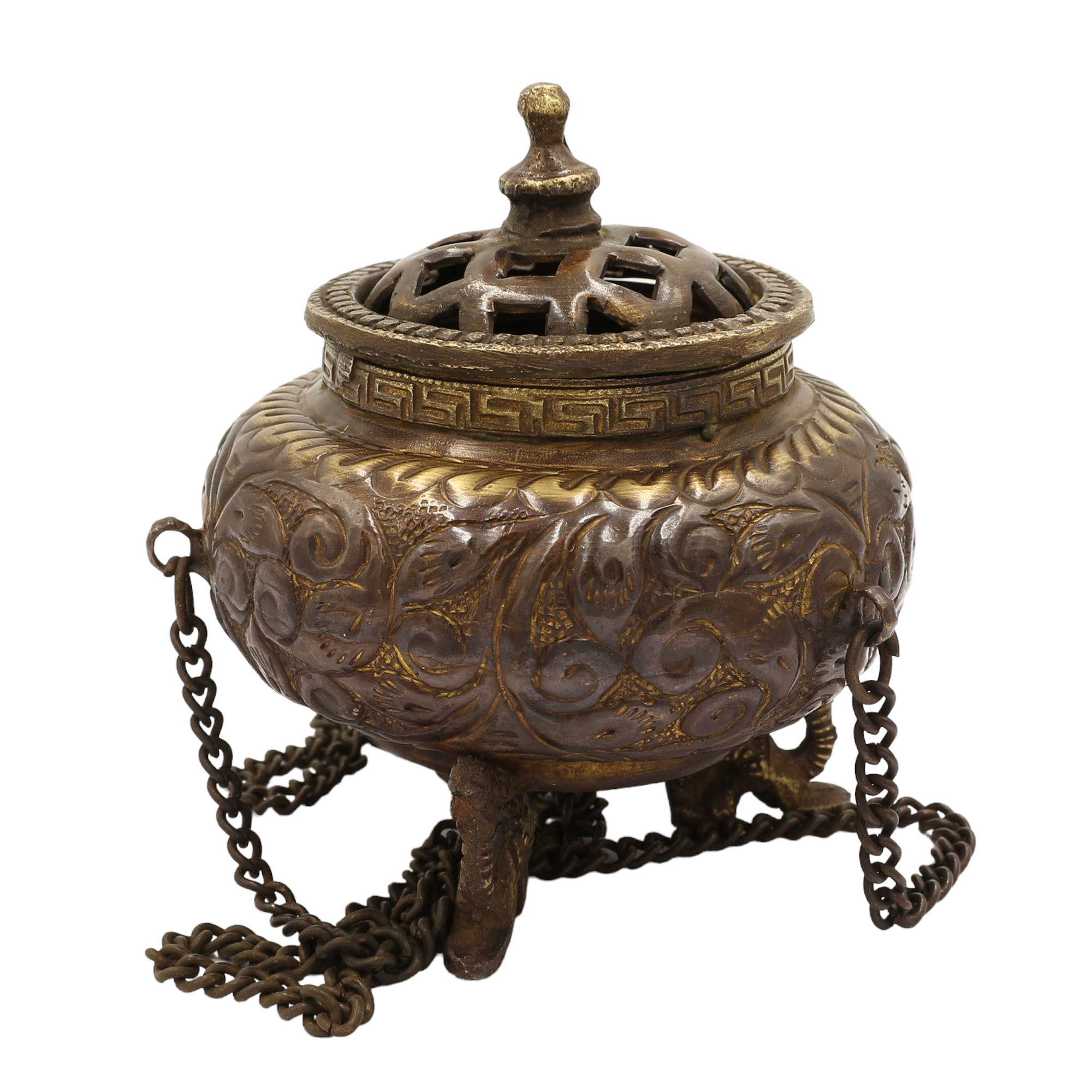
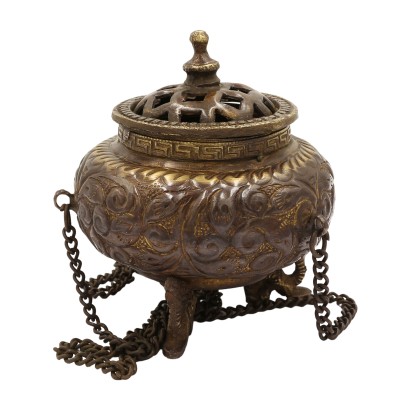
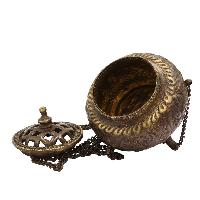
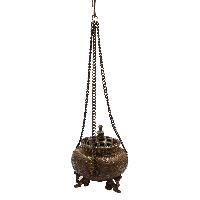
[Sang phulpa] Hand beaten Metal Incense Burner, [Brass and Copper], [Hanging & swinging], Sangbur
| Dimensions: | 11x9x9 cm (4.3 × 3.5 × 3.5 inches) |
| Gross Weight: | 0.03 kg (0.07 lbs) |
| Material: | Copper |
| Iconography / Artist: | Sang phulpa Incense Burner |
| Craft Origin: | Kathmandu Valley, Nepal • Ancient Heritage Technique |
| Cataloged On: | Oct 20, 2022 |
Sang phulpa Incense Burner
What is "Sang"?
"Sang" refers both to the ritual of burning aromatic herbs and to the materials themselves. In Tibetan and Nepali Himalayan traditions, it typically involves dried branches, leaves, or powder from plants like juniper (especially black juniper), wormwood, pine, cypress, or other medicinal herbs. The smoke is believed to:
Purify the environment and space
Clear negative energies or obstacles
Carry offerings and prayers to deities and enlightened beings
Bring blessings, peace, and protection
This practice is deeply rooted in Tibetan Buddhism (especially Nyingma and other schools) and is common in daily household rituals, monastery ceremonies, festivals (like Zamling Chisang in Tibet), weddings, funerals, and personal meditation.
Urn-shaped or bowl-shaped with a deep interior to hold ash, sand, or charcoal.
Perforated lid (with holes or filigree) that allows fragrant smoke to rise gently while containing the burning material.
Raised base or legs for safety and airflow.
Symbolic decorations such as the Face of Glory (Kirtimukha), dragons, Mahakala, lotus motifs, or the Eight Auspicious Symbols.
Sizes vary: smaller ones (around 6–10 inches high) for indoor/home altars, larger or hanging versions for temples or outdoor use.
Many are made in Nepal (especially in the Kathmandu Valley) by skilled artisans and sold as ritual tools for Tibetan Buddhist practitioners. Some modern versions are electric, but traditional ones are metal and meant for charcoal or direct burning.
2. Light your favourite incense stick and place it horizontally on the bed of ash.
3. A small quantity of loose or powder incense may also be sprinkled over the lit incense stick.
4. Remove the ash build-up regularly to ensure the burning incense does not come into close proximity with the lid of the burner, thus preventing heat damage.
Always burn incense in moderate quantities to prevent overheating.
Do not handle the incense burner when hot.
Centuries-Old Lost-Wax Metal Casting
Each sculpture at Handmade Handicraft is crafted using the ancient cire-perdue (lost-wax) technique, a craft perfected over a millennium by the Newar artisans of Patan. The process begins with sculpting beeswax and Himalayan tree resin by hand. A multi-layered clay mold is formed around the wax, which is melted away in the furnace, creating a void that is filled with molten red copper or bronze.
24K Mercury Gilding
Applied with pure gold leaf and fused using fire gilding for an ethereal sheen that endures for generations.
Cold-Gold Face Painting
The sacred facial features and serene gaze of deities are carefully rendered with powdered cold gold and natural pigments.
Hand-Chiseled Detailing
Intricate robes, mandalas, and jewels are carved by hand with miniature steel chisels and devotion.
Door-to-Door Worldwide Express Delivery
Since 1976, we have shipped thousands of delicate sacred statues and handicrafts across North America, Europe, Australia, and Asia with an exceptional track record of safe delivery.
-
Express Carriers: We partner with DHL Express, FedEx International, and licensed Air Cargo freighters with end-to-end tracking.
-
Museum-Grade Packaging: Each piece is wrapped in moisture-resistant vapor barriers, thick high-density foam cushioning, and reinforced export cartons or custom wooden crates for large statues.
-
100% Transit Insurance: All international shipments are fully insured against loss or damage during transit.
-
Customs Clearance & Documentation: Includes official Nepal Archaeological Department export clearances certifying modern non-antique artisan status for hassle-free customs clearance.
Related Artisan Masterpieces