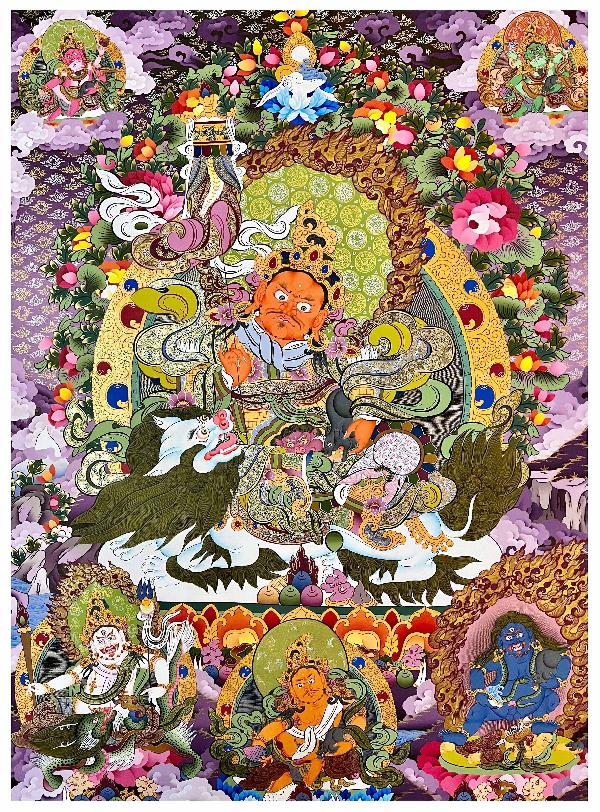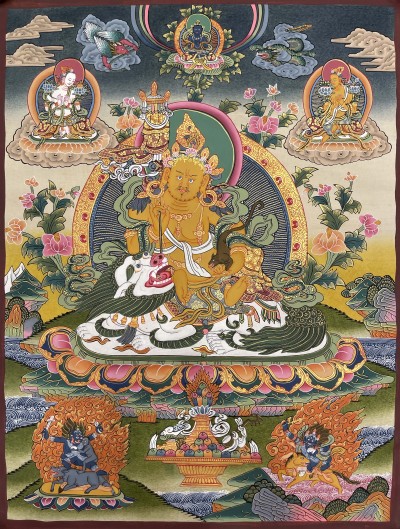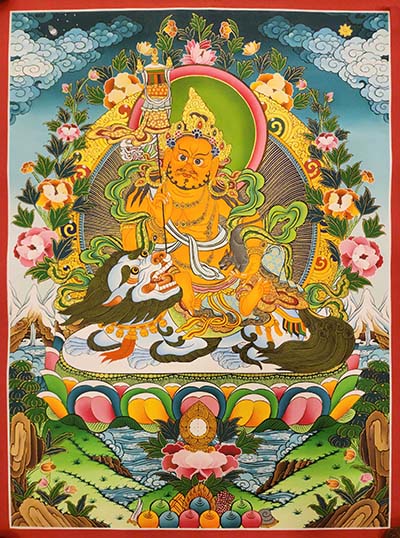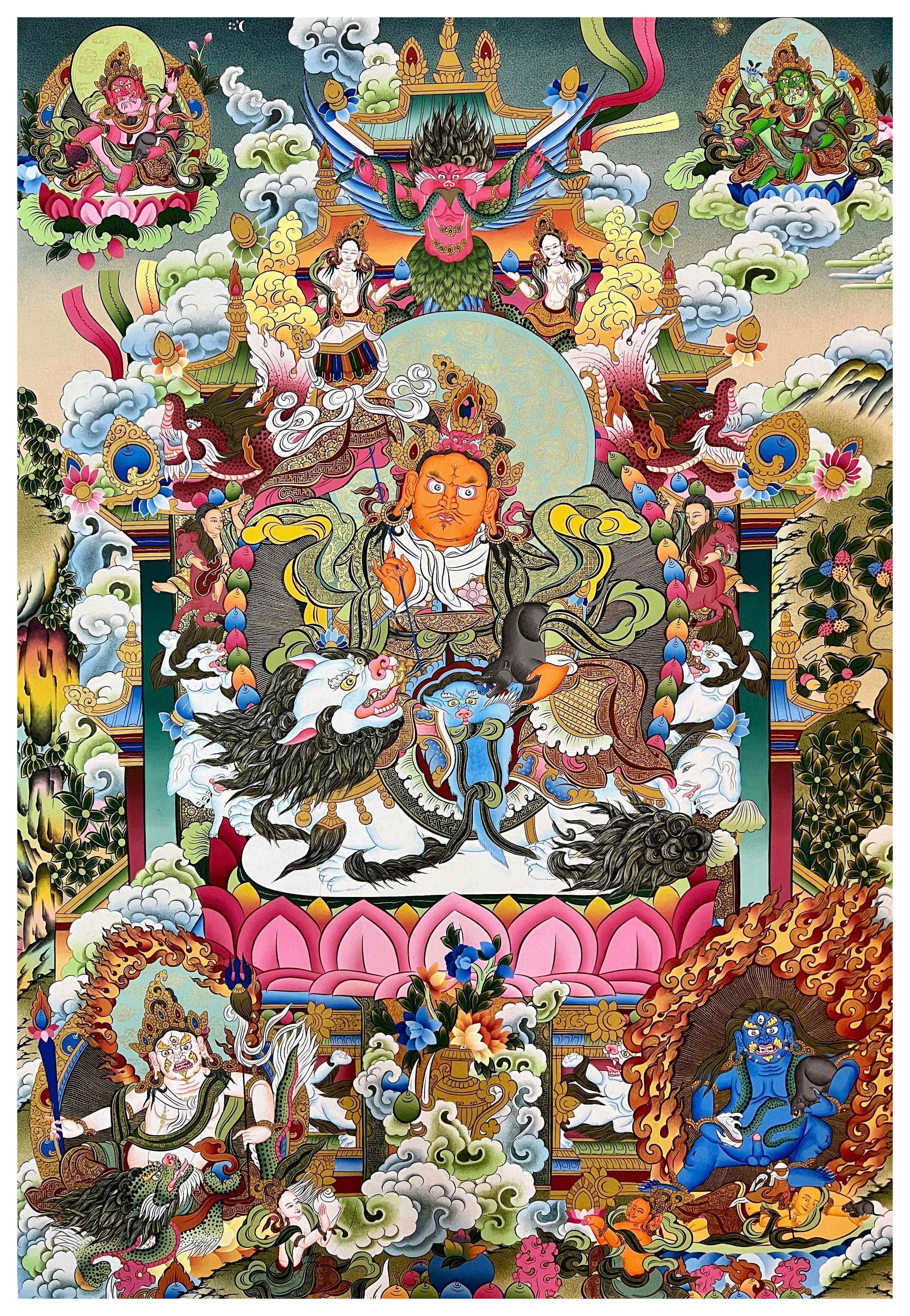
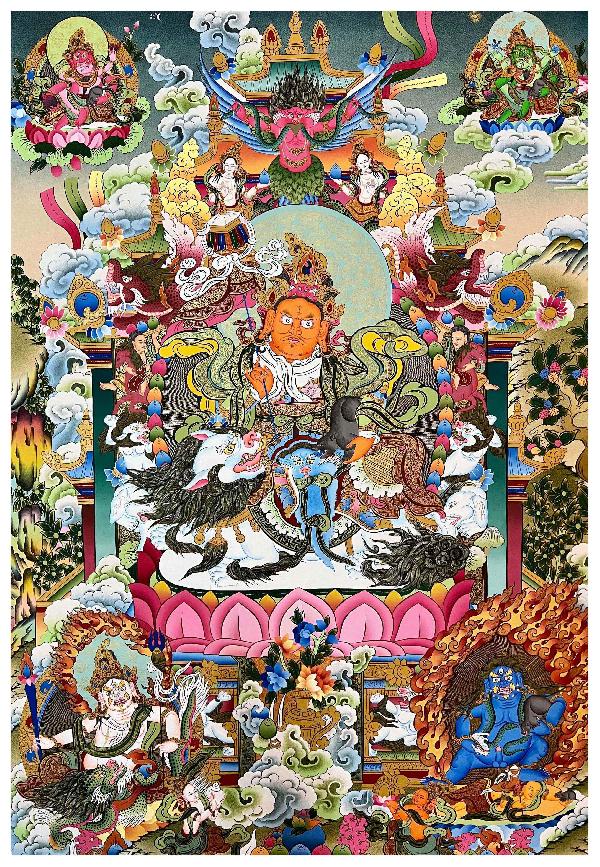
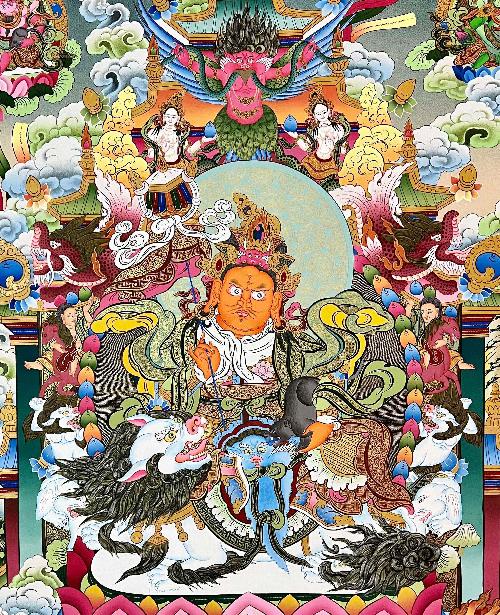
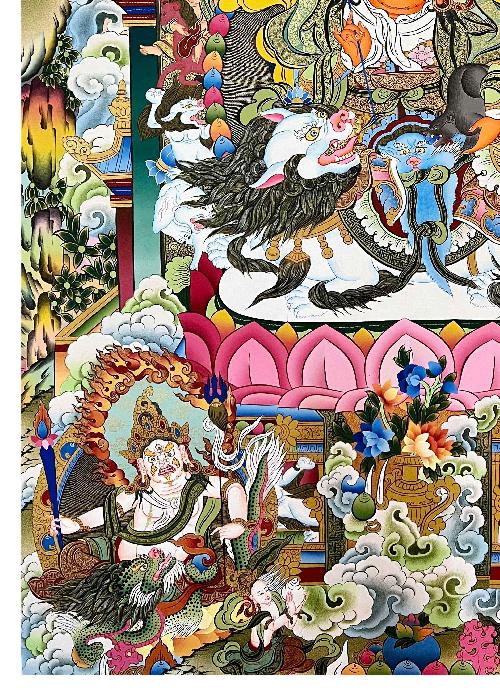
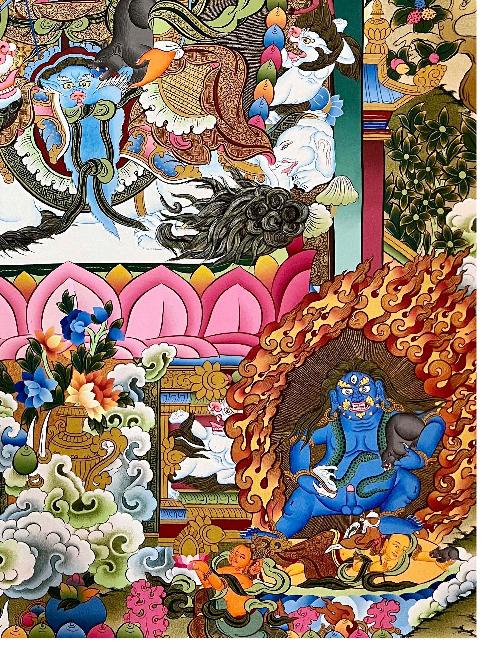
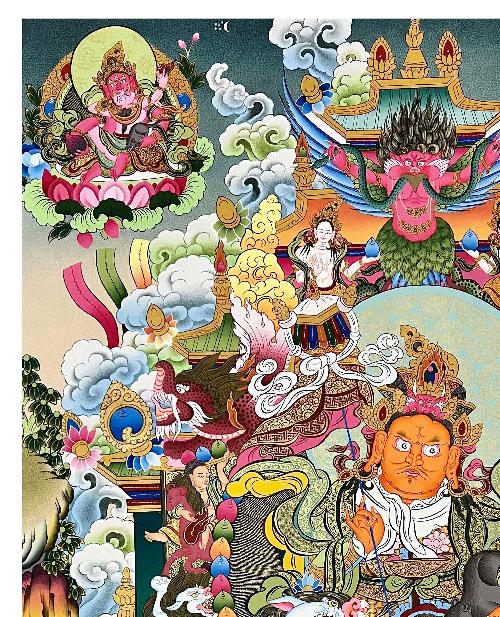
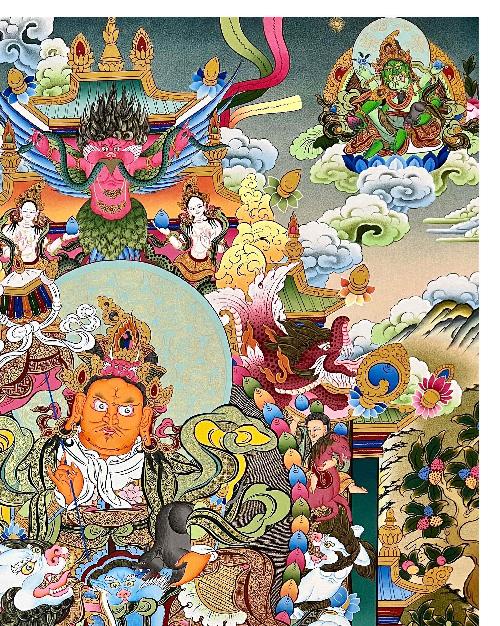
Jambhala: namtose Thangka, Tibetan Buddhist Art, Hand Painted, [Real Gold]
| Dimensions: | 100x70 cm (39.4 × 27.6 inches) |
| Gross Weight: | 0.3 kg (0.66 lbs) |
| Material: | Cotton Canvas |
| Iconography / Artist: | Jambhala: namtose |
| Craft Origin: | Kathmandu Valley, Nepal • Ancient Heritage Technique |
| Cataloged On: | Aug 25, 2023 |
Jambhala: namtose
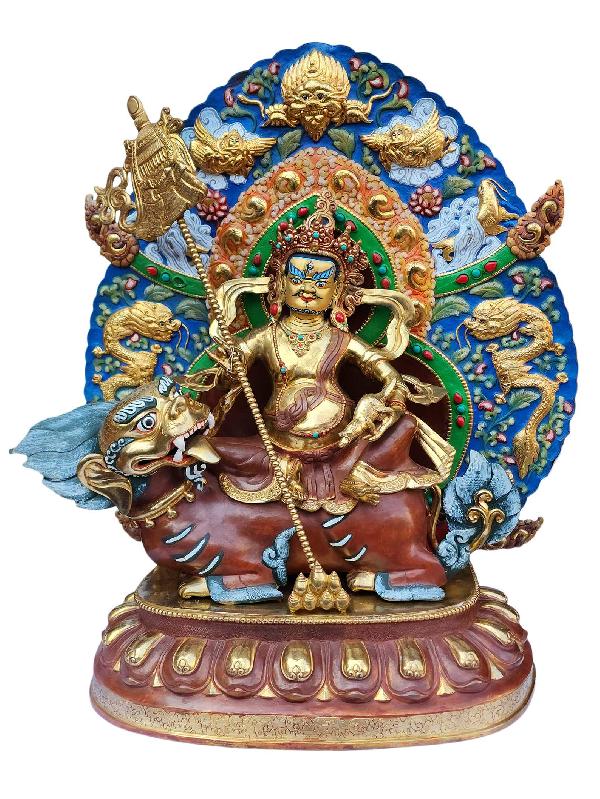
Vaisravana is typically portrayed with a yellow face and can be seen carrying an umbrella or parasol as a symbol of his sovereignty. He is sometimes depicted with a mongoose, which is shown ejecting jewels from its mouth, representing generosity. His mount is a snow lion.
History:
Vaisravana's character is based on the Hindu deity Kubera, but he has his own distinct functions and associated myths. He is considered the guardian of the northern direction and resides in the northern quadrant of Sumeru. Vaisravana is the leader of all the yaksas who dwell on the slopes of Sumeru.
Temples and Monasteries:
In Tibet, Vaisravana is considered a lokapala or dharmapala in the retinue of Ratnasambhava. He is often depicted on temple murals outside the main door. In Thailand, there is a prominent statue of Vaisravana at Wat Chulamanee temple in Samut Songkhram Province.
Benefit of Practicing:
The practice of Vaisravana is believed to bring benefits such as wealth and prosperity. He is considered a god of wealth and abundance. Devotees seek his blessings to attain material well-being and cultivate a mindset of generosity and detachment from greed.
How to Practice:
The specific practices and rituals associated with Vaisravana may vary across different Buddhist traditions. Generally, devotees can engage in prayers, offerings, and meditation to establish a connection with Vaisravana and seek his blessings.
Mantras:
The mantras associated with Vaisravana vary depending on the specific tradition or lineage. Some common mantras include "Om Vasudhare Svaha" and "Om Jambhala Jalendraye Svaha." These mantras can be chanted as part of the practice to invoke Vaisravana's blessings and protection.
 Statue of Vai?rava?a as the guardian at the royal crematorium of King Bhumibol Adulyadej of Thailand, 2017. |  Vai?rava?a as the Seal of Udon Thani Province, Thailand |  Tamonten statue at T?dai-ji, Nara |  Partly gilded Tibetan bronze statue of Vaisravana (Jambhala) sitting on a snow lion and holding a mongoose in his left hand. 18th century |
Vai?rava?a is the guardian of the northern direction, and his home is in the northern quadrant of the topmost tier of the lower half of Sumeru. He is the leader of all the yak?as who dwell on the Sumeru's slopes.
He is often portrayed with a yellow face. He carries an umbrella or parasol (chakra) as a symbol of his sovereignty. He is also sometimes displayed with a mongoose, often shown ejecting jewels from its mouth. The mongoose is the enemy of the snake, a symbol of greed or hatred; the ejection of jewels represents generosity.
Centuries-Old Lost-Wax Metal Casting
Each sculpture at Handmade Handicraft is crafted using the ancient cire-perdue (lost-wax) technique, a craft perfected over a millennium by the Newar artisans of Patan. The process begins with sculpting beeswax and Himalayan tree resin by hand. A multi-layered clay mold is formed around the wax, which is melted away in the furnace, creating a void that is filled with molten red copper or bronze.
24K Mercury Gilding
Applied with pure gold leaf and fused using fire gilding for an ethereal sheen that endures for generations.
Cold-Gold Face Painting
The sacred facial features and serene gaze of deities are carefully rendered with powdered cold gold and natural pigments.
Hand-Chiseled Detailing
Intricate robes, mandalas, and jewels are carved by hand with miniature steel chisels and devotion.
Door-to-Door Worldwide Express Delivery
Since 1976, we have shipped thousands of delicate sacred statues and handicrafts across North America, Europe, Australia, and Asia with an exceptional track record of safe delivery.
-
Express Carriers: We partner with DHL Express, FedEx International, and licensed Air Cargo freighters with end-to-end tracking.
-
Museum-Grade Packaging: Each piece is wrapped in moisture-resistant vapor barriers, thick high-density foam cushioning, and reinforced export cartons or custom wooden crates for large statues.
-
100% Transit Insurance: All international shipments are fully insured against loss or damage during transit.
-
Customs Clearance & Documentation: Includes official Nepal Archaeological Department export clearances certifying modern non-antique artisan status for hassle-free customs clearance.
Related Artisan Masterpieces