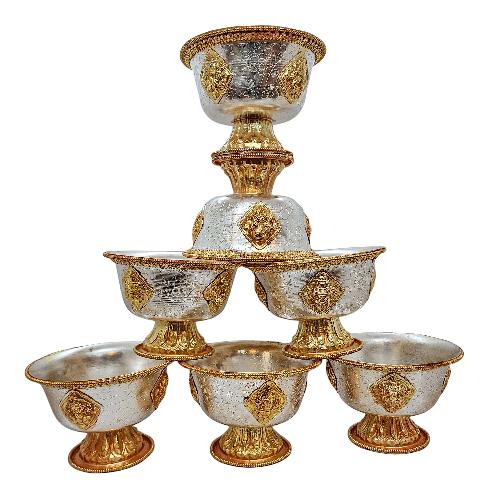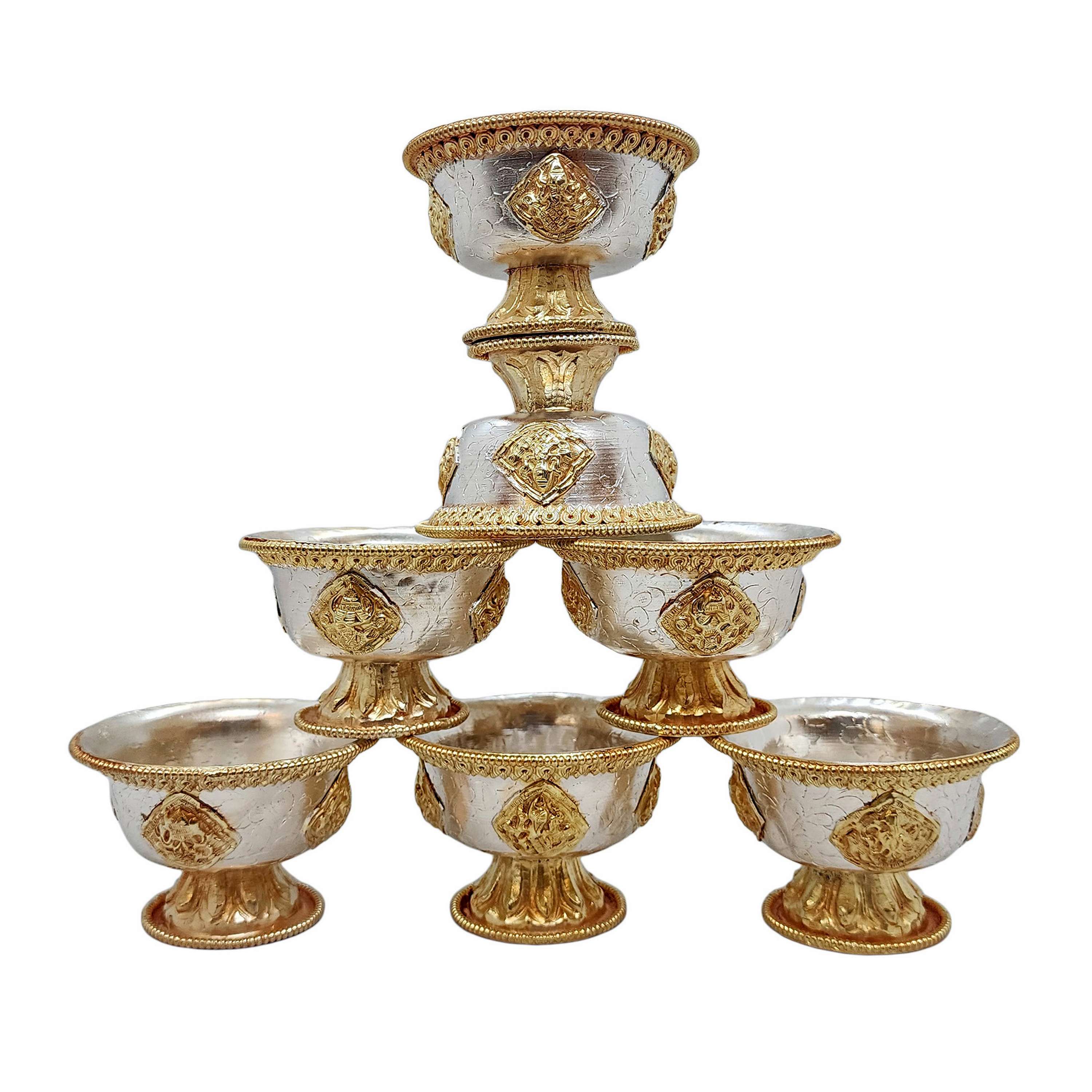
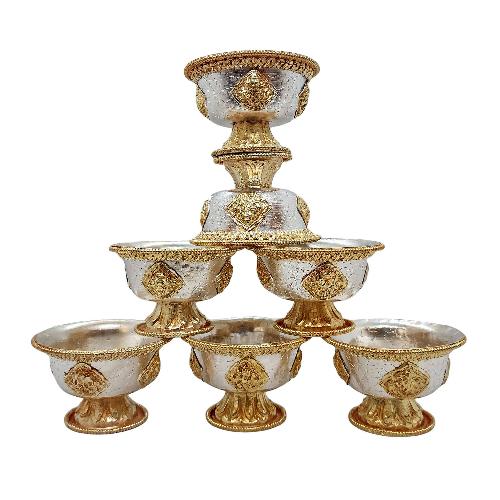
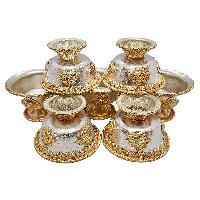
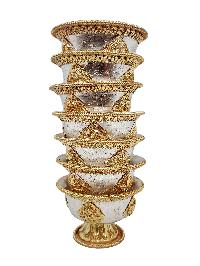
Copper offering Bowl with Stand and Hand Carving 7 Pcs Set, Gold and Silver plated
| Dimensions: | 5.x5x8x8 cm (2 × 2 × 3.1 × 3.1 inches) |
| Gross Weight: | 0.7 kg (1.54 lbs) |
| Material: | Copper |
| Iconography / Artist: | Offering Bowls |
| Craft Origin: | Kathmandu Valley, Nepal • Ancient Heritage Technique |
| Cataloged On: | Nov 08, 2023 |
Offering Bowls
Tibetan Water Offering Bowls: How to Use Them
The main point of any offerings is a pure motivation to cultivate generosity and to reduce our selfishness, stinginess, and greed.
We seek to give with an open, pure heart, with no attachment to what we are giving, and with no motivation of receiving something in return.
We seek to give with an open, pure heart, with no attachment to what we are giving, and with no motivation of receiving something in return.
Paradoxically, as His Holiness the Dalai Lama often teaches, cultivating generosity and devoting ourselves to the welfare of others increases our own happiness in many ways, as we release the painful, stiff worry that accompanies greed and self-centeredness.
He encourages us to become selfishly altruistic, to become happy people by concerning ourselves primarily with the well being of others.
One reason that we offer water is that water in Tibet has traditionally been considered plentiful and free, and therefore painless to give. The idea is that all of our offerings should be given as freely as we would give water.
Another way to view the water offerings is as representing the seven aspects of prayer:
prostrating
offerings to the Buddhas
confessing our wrongs
rejoicing in the good qualities of oneself and others
requesting the Buddhas to remain in this world
beseeching the Buddhas to teach others
dedicating the merit of ourselves and others which has been accumulated throughout time, in order that all sentient beings may enjoy happiness and virtue
Start with seven clean bowls — called ting in Tibetan — and a pitcher of fresh water. Tibetans usually use silver, brass or copper bowls, which range from very plain to carved and intricately decorated treasures.
One by one, pour a little water in each bowl before you place it on the shrine, lining the bowls up from left to right as you face the shrine. The reason to start with a little water in each bowl is that it is inauspicious to have a bowl sitting empty on the shrine.
Tibetan Buddhist masters explain that each bowl should be the distance of one barley seed from the next one.
Starting from left to right, fill each bowl with water, almost to the top. Again, the common thought is that you leave the space of one barley seed from the rim of the bowl.
While setting up your offering bowls, it is common for Tibetans to recite one of the more common mantras, like:
— Om mani padme hung (Avalokiteshvara’s mantra)
— Om muni muni maha munaye soha (Buddha Shakyamuni’s mantra)
— Om tare tuttare ture soha (Tara’s mantra)
Others may recite what is called the gyamdro prayer. The prayer can be whatever you choose. What is most important is that you pray with a sincere wish to cultivate generosity and an open heart.
In the same spirit, you might visualize that you are offering endless quantities of everything beautiful and precious, plus all the good qualities in our hearts and minds, to a vast assembly of Buddhas.
You can put a butter lamp between the third and fourth bowls, or between the fourth and fifth bowls, symbolizing the light of wisdom, dispelling the darkness of ignorance.
Once the bowls are filled, it is common to bless the offerings with kusha grass (also called elephant grass) or any kind of clean straw or stick that you may have access to. To do this, you dip your grasses into one of the bowls and sprinkle the shrine with water, reciting the purifying mantra “om a hum.” (From Khandro.net)
Finally, you can dedicate the merit you have gained by the offerings to the elimination of suffering and its causes for all sentient beings.
Centuries-Old Lost-Wax Metal Casting
Each sculpture at Handmade Handicraft is crafted using the ancient cire-perdue (lost-wax) technique, a craft perfected over a millennium by the Newar artisans of Patan. The process begins with sculpting beeswax and Himalayan tree resin by hand. A multi-layered clay mold is formed around the wax, which is melted away in the furnace, creating a void that is filled with molten red copper or bronze.
24K Mercury Gilding
Applied with pure gold leaf and fused using fire gilding for an ethereal sheen that endures for generations.
Cold-Gold Face Painting
The sacred facial features and serene gaze of deities are carefully rendered with powdered cold gold and natural pigments.
Hand-Chiseled Detailing
Intricate robes, mandalas, and jewels are carved by hand with miniature steel chisels and devotion.
Door-to-Door Worldwide Express Delivery
Since 1976, we have shipped thousands of delicate sacred statues and handicrafts across North America, Europe, Australia, and Asia with an exceptional track record of safe delivery.
-
Express Carriers: We partner with DHL Express, FedEx International, and licensed Air Cargo freighters with end-to-end tracking.
-
Museum-Grade Packaging: Each piece is wrapped in moisture-resistant vapor barriers, thick high-density foam cushioning, and reinforced export cartons or custom wooden crates for large statues.
-
100% Transit Insurance: All international shipments are fully insured against loss or damage during transit.
-
Customs Clearance & Documentation: Includes official Nepal Archaeological Department export clearances certifying modern non-antique artisan status for hassle-free customs clearance.
Related Artisan Masterpieces
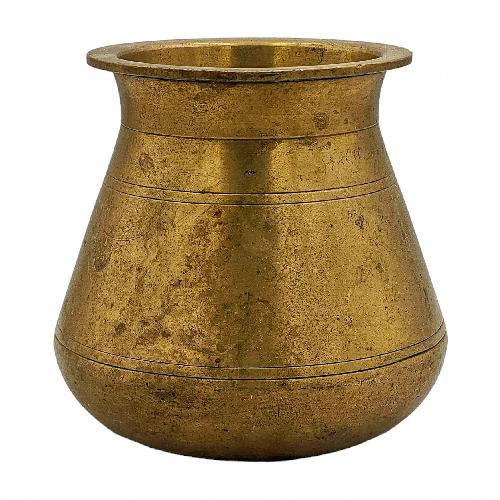
Traditional Metal offering Bowl, [Water pot or Lota], [Select Accessories]
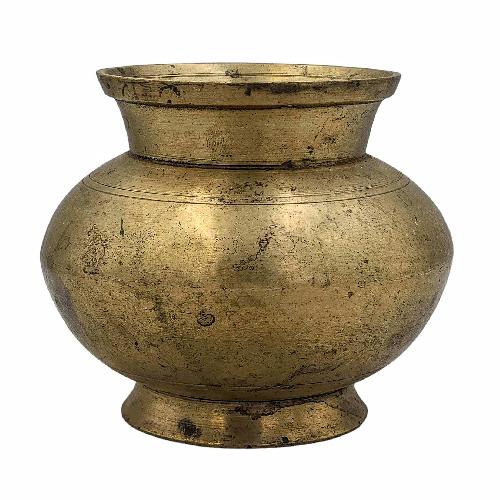
Traditional Metal offering Bowl, [Water pot or Lota], [Select Accessories]
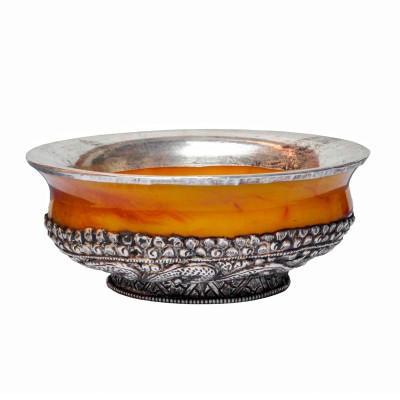
Silver Cup with emitted [Amber] Offering Bowls, [Silver carving], Offering Bowls