

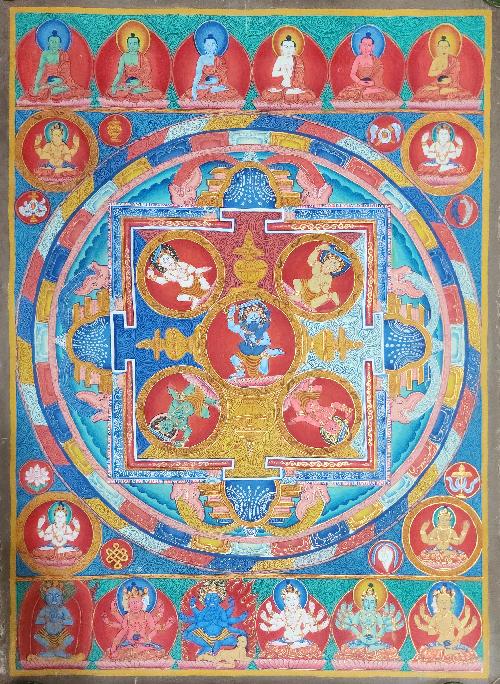

[Chandamaharoshana], [Khadga Pani] With [Chenrezig, Shakyamuni Buddha and Various Gods], Buddhist Traditional Painting, Hand Painted, Newari thangka
| Dimensions: | 78x55 cm (30.7 × 21.7 inches) |
| Gross Weight: | 0.28 kg (0.62 lbs) |
| Material: | cotton canvas |
| Iconography / Artist: | Chandamaharoshana |
| Craft Origin: | Kathmandu Valley, Nepal • Ancient Heritage Technique |
| Cataloged On: | Apr 29, 2024 |
Chandamaharoshana
Chandamaharoshana manifests as a blue-black deity with a fierce face, three eyes, and two arms. He is depicted in the kneeling achalasana posture, pressing his left knee and foot upon the forms of the Vedic gods Maheshvara, Vishnu, and Indra. Brahma is crushed under his right foot. These deities symbolize the four maras or 'obstructive demons.' Chandamaharoshana's body is adorned with golden bracelets and filigree bone ornaments. He wears a billowing green silk scarf, a loosened tiger-skin loincloth for sexual intercourse, and a garland of severed heads. His golden crown features five dry white skulls, five radiant jewels, and five silver kikinpa crowned with ornate parasols. A crescent moon and a serpent adorn his tawny upward-streaming hair, while golden victory flags appear above his ears. His red eyebrows and facial hair blaze upward, and his three bloodshot eyes gaze down at his consort.
History
Chandamaharoshana finds its roots in the ancient traditions of Vajrayana Buddhism. The deity holds significant importance in both Tibetan and Newar Buddhist practices. The Chandamaharoshana Tantra, originating from early India, has preserved its esoteric symbolism and continues to be revered in the Newar Buddhist tradition. Throughout history, the worship of Chandamaharoshana has spread to various regions, including Japan, where he is known as Fudo Myo-o in the Shingon Tradition.
Temples and Monasteries
Unfortunately, specific information regarding temples and monasteries dedicated to Chandamaharoshana, particularly in Nepal, is not available within my knowledge base. However, it is likely that dedicated spaces for worship exist, especially in areas influenced by Vajrayana Buddhism. Further research or local sources can provide more accurate and up-to-date information on the locations of temples or monasteries associated with Chandamaharoshana.
Benefits of Practicing Chandamaharoshana
The practice of Chandamaharoshana is believed to offer numerous benefits to its practitioners. These benefits may include spiritual empowerment, protection from obstacles, the cultivation of skillful means, and transforming negative emotions into wisdom. By engaging with the symbolism and teachings associated with Chandamaharoshana, practitioners aim to harness his fierce energy to overcome inner and outer hindrances, ultimately progressing on the path to enlightenment.
How to Practice
The practice of Chandamaharoshana involves engaging with the deity through meditation, visualization, recitation of mantras, and ritual offerings. Practitioners may receive specific instructions and empowerment from qualified teachers within the Vajrayana Buddhist tradition. The detailed methods and practices may vary depending on the lineage or tradition. It is recommended to seek guidance from experienced practitioners or spiritual teachers to ensure a proper understanding and implementation of the practices associated with Chandamaharoshana.
Mantras of Chandamaharoshana
The mantras associated with Chandamaharoshana are considered potent and effective in invoking the deity's presence and blessings. While I don't have access to specific mantras associated with Chandamaharoshana, these mantras typically contain sacred syllables and sounds believed to represent the enlightened qualities and essence of the deity. Chanting or reciting these mantras with devotion and understanding is believed to establish a deep connection with Chandamaharoshana and facilitate spiritual growth and transformation. Seek guidance from qualified teachers or practitioners to receive authentic mantras and instructions pertaining to Chandamaharoshana's practice.
Centuries-Old Lost-Wax Metal Casting
Each sculpture at Handmade Handicraft is crafted using the ancient cire-perdue (lost-wax) technique, a craft perfected over a millennium by the Newar artisans of Patan. The process begins with sculpting beeswax and Himalayan tree resin by hand. A multi-layered clay mold is formed around the wax, which is melted away in the furnace, creating a void that is filled with molten red copper or bronze.
24K Mercury Gilding
Applied with pure gold leaf and fused using fire gilding for an ethereal sheen that endures for generations.
Cold-Gold Face Painting
The sacred facial features and serene gaze of deities are carefully rendered with powdered cold gold and natural pigments.
Hand-Chiseled Detailing
Intricate robes, mandalas, and jewels are carved by hand with miniature steel chisels and devotion.
Door-to-Door Worldwide Express Delivery
Since 1976, we have shipped thousands of delicate sacred statues and handicrafts across North America, Europe, Australia, and Asia with an exceptional track record of safe delivery.
-
Express Carriers: We partner with DHL Express, FedEx International, and licensed Air Cargo freighters with end-to-end tracking.
-
Museum-Grade Packaging: Each piece is wrapped in moisture-resistant vapor barriers, thick high-density foam cushioning, and reinforced export cartons or custom wooden crates for large statues.
-
100% Transit Insurance: All international shipments are fully insured against loss or damage during transit.
-
Customs Clearance & Documentation: Includes official Nepal Archaeological Department export clearances certifying modern non-antique artisan status for hassle-free customs clearance.
Related Artisan Masterpieces
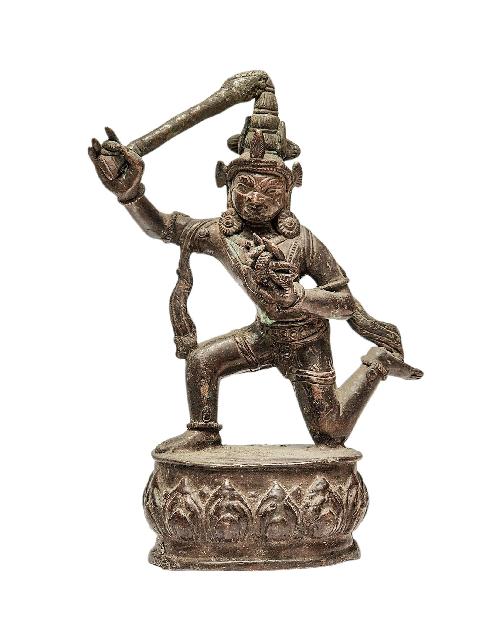
[+ 50 Year Old] Buddhist Miniature Statue Of [Chandamaharoshana], [Old Stock], Sankata

[+ 50 Year Old] Buddhist Miniature Statue Of [Chandamaharoshana], [Old Stock], Sankata

