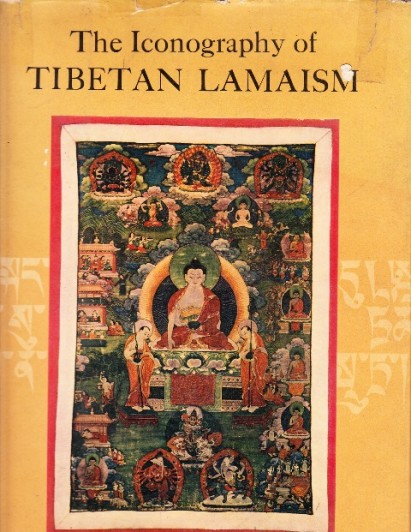
The Iconography of Tibetan Lamaism
| Dimensions: | 31x23 cm (12.2 × 9.1 inches) |
| Gross Weight: | 1.72 kg (3.79 lbs) |
| Material: | Papper |
| Iconography / Artist: | Religious Books |
| Craft Origin: | Kathmandu Valley, Nepal • Ancient Heritage Technique |
| Cataloged On: | Nov 22, 2017 |
Religious Books
Hinduism is the predominant religion in Nepal, and as such, many religious books are related to it. The most popular ones are the Vedas, Puranas, Upanishads, Ramayana, and Mahabharata. These books contain information on Hindu deities, their stories, philosophies, and practices. The Bhagavad Gita, a sacred text, is also widely read and revered in Nepal, and is considered the essence of Hindu philosophy.
Islamic books, such as the Quran and Hadith, are also prevalent in Nepal, particularly in the Muslim community. These books contain teachings, stories, and principles related to Islam.
In addition to these, Nepal is also home to a small Christian population, and there are several Christian religious books available in the country. These include the Bible, which is considered the holy book for Christians, and other religious texts and teachings.
Overall, religious books found in Nepal are an integral part of the country's diverse cultural and spiritual landscape. They offer insight into various religions, philosophies, and practices and provide guidance and inspiration to many Nepalese people.
Item Specific Details & Notes
The rich cultural and spiritual heritage of Buddhism has recently been commanding increasingly serious attention among a wide public in the West. Lamaism, the Tibetan offshoot of Buddhism, has itself fascinated not only the specialists but also an expanding number of artists, students, and collectors who have been impressed by the subtlety of Tibetan religious thought and the quality of its art. And Tibetan art, with its brilliant colouring, decorative design, and subtle iconography, has come to be recognized as one of the outstanding achievements of religious art in the Orient. Tibetan art, however, perhaps more so than any other religious art, is permeated with the tenets of the highly developed religious tradition and body of theological dogma to which it gives concrete expression. The colourful thangkas, although aesthetically appealing in themselves, cannot be fully understood or appreciated without at least a rudimentary knowledge of the religious precepts of Lamaism and the profuse symbols used in giving these tenets visual form. For the number of gods in the Tibetan pantheon seems to be limited only by the bonds of human imagination, and every image and detail is given symbolic meaning. The Iconography of Tibetan Lamaism was first published in 1939, for the express purpose of "giving the student interested in Tibetan Iconography a general idea of the development of Buddhism into Lamaism, and making easier the identification of the various deities of the Tibetan pantheon." Although interest in the field has grown over the years, the book has remained the only authoritative work of its kind. The book gives a descriptive outline of the principal gods in the Tibetan pantheon, tracing the main features and symbols that are used to denote each one. A comprehensive illustrated list of the various ritual objects, talismans, symbols, mudras (symbolic hand poses), and asanas and vahanas (position of the lower limbs) that are used in the images of gods is accompanied with a word list of the Sanskrit terms most commonly encountered in a study of Lamaism
ISBN:R000003488
Author:Antoinette K. Gordon
Publisher:Charles E. Tuttle Company
Publish Year:1960
Edition:Third Edition
Cover:Hard Back With Dust Jacket
Subject:Iconography | Tibetan Buddhism
Language:English
Remarks:B&W Photographs and Illustrations, Bibliography and Index. Fine. Dust jacket, worn out, soiled, cello-taped, price clipped. Previous owner name stamp on front endpaper and slightly sunned pages. Apart from the book is as new.
Pages:131
Centuries-Old Lost-Wax Metal Casting
Each sculpture at Handmade Handicraft is crafted using the ancient cire-perdue (lost-wax) technique, a craft perfected over a millennium by the Newar artisans of Patan. The process begins with sculpting beeswax and Himalayan tree resin by hand. A multi-layered clay mold is formed around the wax, which is melted away in the furnace, creating a void that is filled with molten red copper or bronze.
24K Mercury Gilding
Applied with pure gold leaf and fused using fire gilding for an ethereal sheen that endures for generations.
Cold-Gold Face Painting
The sacred facial features and serene gaze of deities are carefully rendered with powdered cold gold and natural pigments.
Hand-Chiseled Detailing
Intricate robes, mandalas, and jewels are carved by hand with miniature steel chisels and devotion.
Door-to-Door Worldwide Express Delivery
Since 1976, we have shipped thousands of delicate sacred statues and handicrafts across North America, Europe, Australia, and Asia with an exceptional track record of safe delivery.
-
Express Carriers: We partner with DHL Express, FedEx International, and licensed Air Cargo freighters with end-to-end tracking.
-
Museum-Grade Packaging: Each piece is wrapped in moisture-resistant vapor barriers, thick high-density foam cushioning, and reinforced export cartons or custom wooden crates for large statues.
-
100% Transit Insurance: All international shipments are fully insured against loss or damage during transit.
-
Customs Clearance & Documentation: Includes official Nepal Archaeological Department export clearances certifying modern non-antique artisan status for hassle-free customs clearance.
Related Artisan Masterpieces