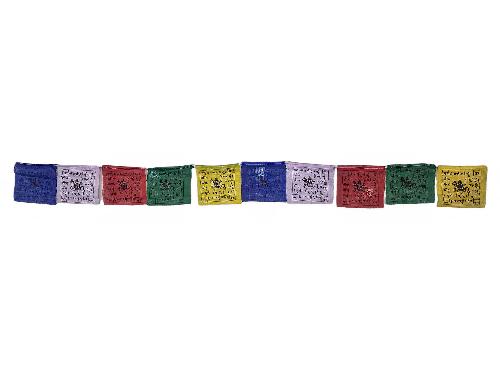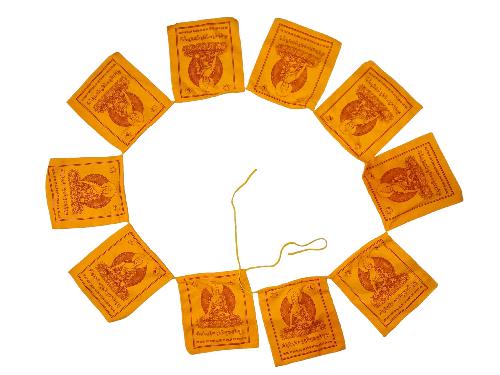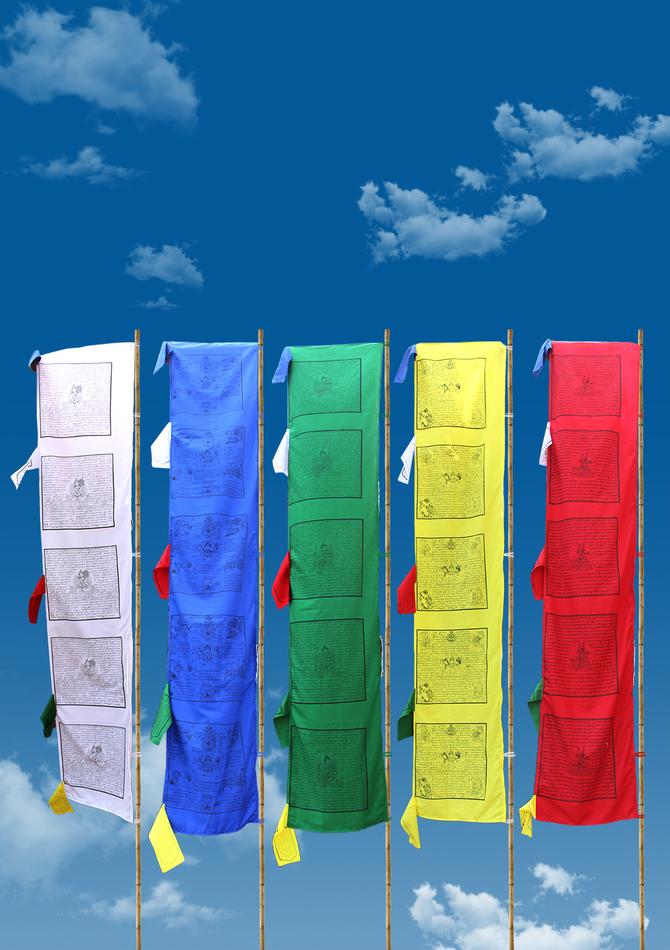
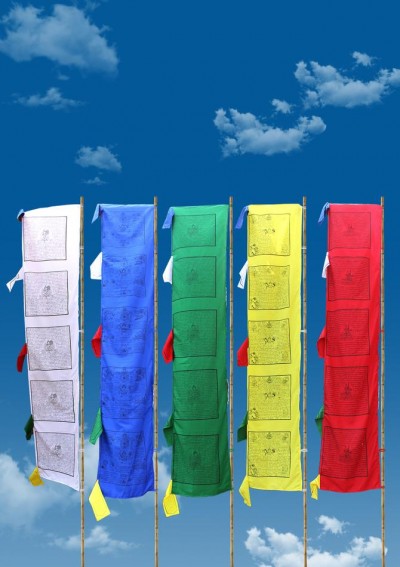

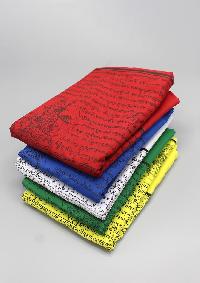
Vertical Tibetan Prayer Flags [5 Color set]
| Dimensions: | 240x50 cm (94.5 × 19.7 inches) |
| Gross Weight: | 1.2 kg (2.65 lbs) |
| Material: | Cotton |
| Iconography / Artist: | Prayer Flags |
| Craft Origin: | Kathmandu Valley, Nepal • Ancient Heritage Technique |
| Cataloged On: | May 31, 2020 |
Prayer Flags
Tibetan and Nepalese "Prayer Flags" Explained | Trek Tips
Tibetan Prayer flags
Nepal Sutras, originally written on cloth banners, were transmitted to other regions of the world as prayer flags.used by the devas against their adversaries, the asuras. carrying the heavenly banner as a way of signifying his commitment to ahimsa. Indian practice of printing on cloth prayer flags to Tibet and Nepal.
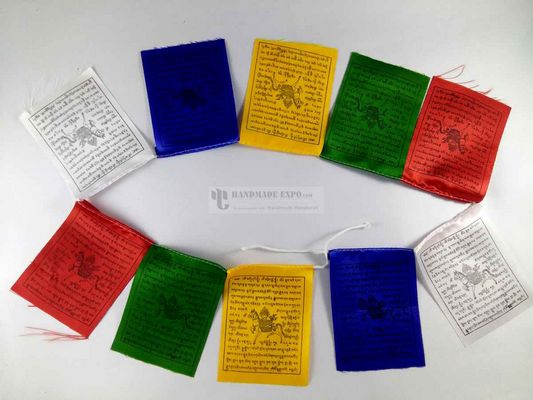
Traditionally, prayer flags come in sets of five: one in each of five colors. The five colors are arranged from left to right in a specific order: blue, white, red, green, and yellow. The five colors represent the five elements. Five Pure Lights. Different elements are associated with different colors for specific traditions, purposes and sadhana. Blue symbolizes the sky and space, white symbolizes the air and wind, red symbolizes fire, green symbolizes water, and yellow symbolizes earth. According to Traditional Tibetan medicine, health and harmony are produced through the balance of the five elements.
Symbols and prayers
The center of a prayer flag traditionally features a Lung ta (powerful or strong horse) bearing three flaming jewels (specifically ratna) on its back. The Ta is a symbol of speed and the transformation of bad fortune to good fortune. The three flaming jewels symbolize the Buddha, the Dharma (Buddhist teachings), and the Sangha (Buddhist community): the three cornerstones of Tibetan philosophical tradition.
Surrounding the Lung ta are various versions of approximately 400 traditional mantras, each dedicated to a particular deity. These writings include mantras from three of the great Buddhist Bodhisattvas: Padmasambhava (Guru Rinpoche), Avalokiteśvara (Chenrezig, the bodhisattva of compassion, and the patron of the Tibetan people), and Manjusri.
In addition to mantras, prayers for a long life of good fortune are often included for the person who mounts the flags.
Images or the names of four powerful animals, also known as the Four Dignities, adorn each corner of a flag: the dragon, the garuda, the tiger, and the snowlion.

Symbolism and tradition
Traditionally, prayer flags are used to promote peace, compassion, strength, and wisdom. The flags do not carry prayers to gods, which is a common misconception; rather, the Tibetans believe the prayers and mantras will be blown by the wind to spread the good will and compassion into all pervading space. Therefore, prayer flags are thought to bring benefit to all.
By hanging flags in high places the Lung ta will carry the blessings depicted on the flags to all beings. As wind passes over the surface of the flags, which are sensitive to the slightest movement of the wind, the air is purified and sanctified by the mantras.
The prayers of a flag become a permanent part of the universe as the images fade from exposure to the elements. Just as life moves on and is replaced by new life, Tibetans renew their hopes for the world by continually mounting new flags alongside the old. This act symbolizes a welcoming of life's changes and an acknowledgment that all beings are part of a greater ongoing cycle.
According to traditional belief, because the symbols and mantras on prayer flags are sacred, they should be treated with respect. They should not be placed on the ground or used on clothing. Old prayer flags should be burned.
Centuries-Old Lost-Wax Metal Casting
Each sculpture at Handmade Handicraft is crafted using the ancient cire-perdue (lost-wax) technique, a craft perfected over a millennium by the Newar artisans of Patan. The process begins with sculpting beeswax and Himalayan tree resin by hand. A multi-layered clay mold is formed around the wax, which is melted away in the furnace, creating a void that is filled with molten red copper or bronze.
24K Mercury Gilding
Applied with pure gold leaf and fused using fire gilding for an ethereal sheen that endures for generations.
Cold-Gold Face Painting
The sacred facial features and serene gaze of deities are carefully rendered with powdered cold gold and natural pigments.
Hand-Chiseled Detailing
Intricate robes, mandalas, and jewels are carved by hand with miniature steel chisels and devotion.
Door-to-Door Worldwide Express Delivery
Since 1976, we have shipped thousands of delicate sacred statues and handicrafts across North America, Europe, Australia, and Asia with an exceptional track record of safe delivery.
-
Express Carriers: We partner with DHL Express, FedEx International, and licensed Air Cargo freighters with end-to-end tracking.
-
Museum-Grade Packaging: Each piece is wrapped in moisture-resistant vapor barriers, thick high-density foam cushioning, and reinforced export cartons or custom wooden crates for large statues.
-
100% Transit Insurance: All international shipments are fully insured against loss or damage during transit.
-
Customs Clearance & Documentation: Includes official Nepal Archaeological Department export clearances certifying modern non-antique artisan status for hassle-free customs clearance.
Related Artisan Masterpieces