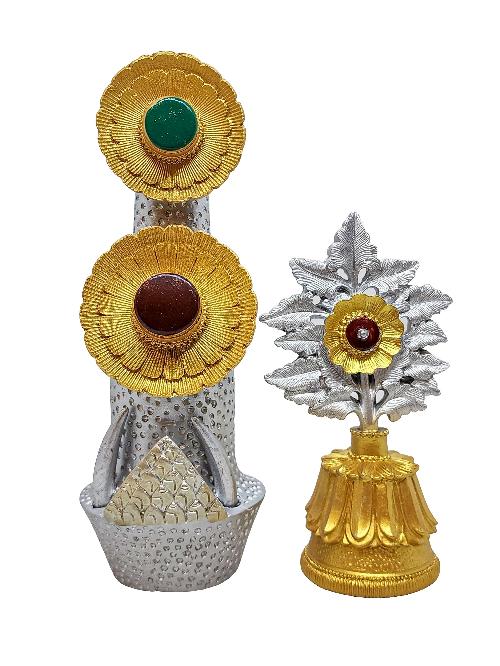
Tibetan Torma Metal Handcrafted [Torma Offering], [Thangka Color Finishing]
| Dimensions: | 19x9x9 cm (7.5 × 3.5 × 3.5 inches) |
| Gross Weight: | 0.3 kg (0.66 lbs) |
| Material: | Copper |
| Iconography / Artist: | Torma |
| Craft Origin: | Kathmandu Valley, Nepal • Ancient Heritage Technique |
| Cataloged On: | Sep 28, 2026 |
Torma
The Tibetan term comes from the root gtor-ba which means to "cast away, break up, or scatter". This implies both a sense of offering and of letting go or non-attachment.
Deity tormas
Deity tormas (Wylie: rten gtor) are kept on the shrine, and represent a particular tantric deity. These tormas vary in complexity from a very simple cone painted white for peaceful deities like Tara and Avalokiteshvara, to very complex designs for semi-wrathful deities like Vajrayogini and Chakrasamvara.
Food tormas
Food tormas (Wylie: skang gtor) are used in feast practices and are consumed partially by practitioners during the feast, with leftovers (Wylie: dme gtor) offered to lower beings after being blessed. In some traditions, food tormas are now made with more contemporary ingredients whereas others stay faithful to the barley flour tradition.
Offering tormas
Offering tormas may be made for and offered to deities (Wylie: sgrub gtor / mchod gtor), to Dharma Protectors, to obstructing spirits, or to other lower beings. Torma for obstructing spirits are called gektor (Wylie: gegs gtor).
Medicinal torma
A torma may be used in Tibetan medicine to extract an illness from a patient as a cure. The torma is then cast away.
Captured torma
A captured torma (Wylie: gta' gtor) may be used to speed completion of activities, by planning to offer the torma at the completion of the activity thereby encouraging successful activity.
Inner, secret and very secret torma
Practicing meditation with deity visualization is considered a form of torma offering, though no physical cake is created and then offered. Similarly, offering one's internal emotional and mental experiences and experience of suchness are non-physical forms of torma offerings.
Centuries-Old Lost-Wax Metal Casting
Each sculpture at Handmade Handicraft is crafted using the ancient cire-perdue (lost-wax) technique, a craft perfected over a millennium by the Newar artisans of Patan. The process begins with sculpting beeswax and Himalayan tree resin by hand. A multi-layered clay mold is formed around the wax, which is melted away in the furnace, creating a void that is filled with molten red copper or bronze.
24K Mercury Gilding
Applied with pure gold leaf and fused using fire gilding for an ethereal sheen that endures for generations.
Cold-Gold Face Painting
The sacred facial features and serene gaze of deities are carefully rendered with powdered cold gold and natural pigments.
Hand-Chiseled Detailing
Intricate robes, mandalas, and jewels are carved by hand with miniature steel chisels and devotion.
Door-to-Door Worldwide Express Delivery
Since 1976, we have shipped thousands of delicate sacred statues and handicrafts across North America, Europe, Australia, and Asia with an exceptional track record of safe delivery.
-
Express Carriers: We partner with DHL Express, FedEx International, and licensed Air Cargo freighters with end-to-end tracking.
-
Museum-Grade Packaging: Each piece is wrapped in moisture-resistant vapor barriers, thick high-density foam cushioning, and reinforced export cartons or custom wooden crates for large statues.
-
100% Transit Insurance: All international shipments are fully insured against loss or damage during transit.
-
Customs Clearance & Documentation: Includes official Nepal Archaeological Department export clearances certifying modern non-antique artisan status for hassle-free customs clearance.
Related Artisan Masterpieces
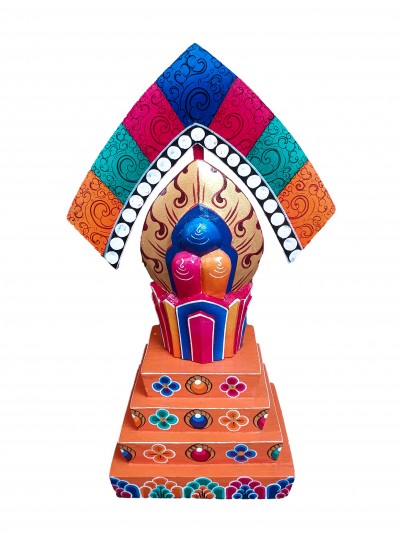
Buddhist Offering Item Of Wooden Painted Torma Zambala Wooden Painted Torma, []
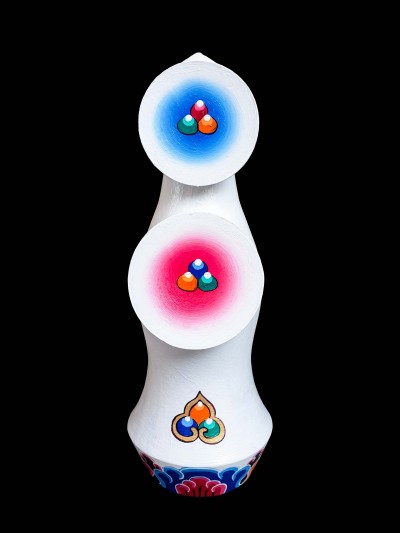
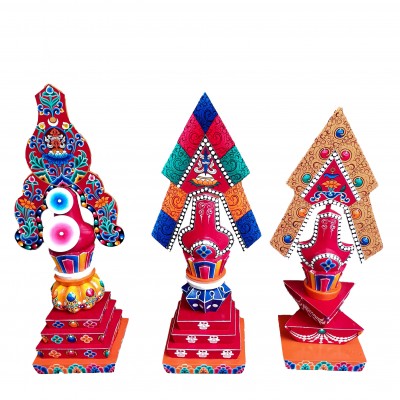
Buddhist Offering Item Of Wooden Painted Torma Set Of Bajra and Phurba, [10x10x40 Each]